Long ago, human beings lived very differently from the way we live today.
Our ancestors had to find food, shelter and clothing with whatever was available around them. They did not have the many choices we have today. Animal skins were sometimes used for protection from cold, rain and harsh weather. For many early communities, using animal hides could be a matter of survival.
But our lives have changed.
Our ancestors had limited choices. We have multiple choices today.
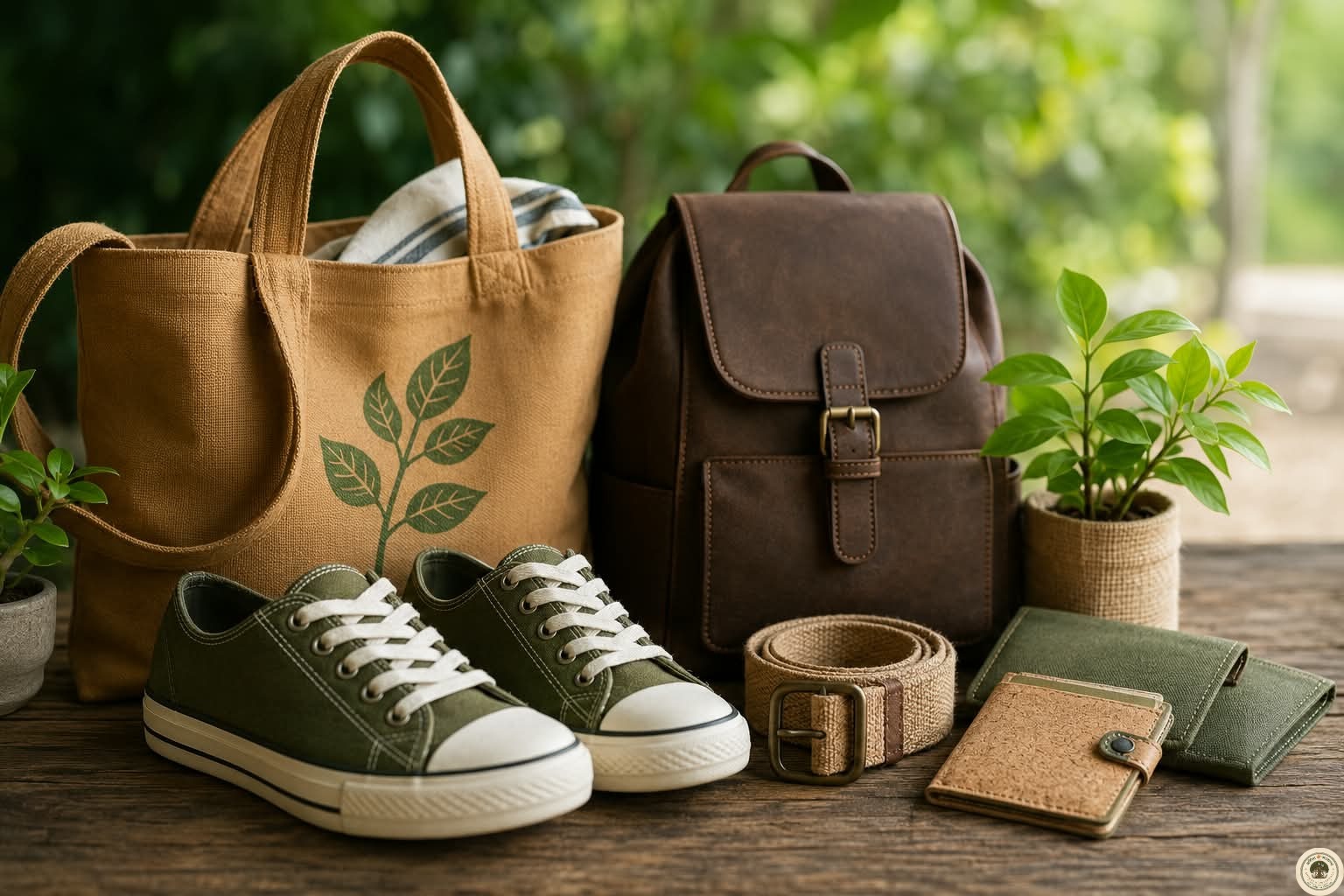
Today, we have many materials available to us. We have cotton, linen, hemp, canvas, synthetic materials and many innovative alternatives that can be used to make shoes, bags, belts, wallets, jackets and other everyday products.
So it is worth asking ourselves a simple question:
Do we still need to use animal skin when we have other choices?
🌱 What does Ahimsa teach us?
Ahimsa means avoiding harm and developing compassion towards all living beings.
Animals are living beings, just like us. They can experience fear, pain and distress. When we choose a product made from animal skin, it is easy to think only about the finished product—a beautiful bag, a pair of shoes or a comfortable belt.
We may not see the animal behind the material.
Ahimsa encourages us to look a little deeper.
Where did this material come from?
Was an animal harmed for it?
Do I really need it?
Is there another choice?
These are simple questions, but they can lead to thoughtful decisions.
👞 Fashion and Our Choices
We often buy things because they look good, feel good or are fashionable.
There is nothing wrong with wanting something beautiful.
But perhaps we can add one more question before we buy:
“Can I have this without causing unnecessary harm?”
Choosing an alternative does not mean giving up style or comfort. It means becoming more conscious about what we support through our purchases.
A small decision made by one person may seem insignificant. But when many people make thoughtful choices, those choices can influence what businesses produce and what society considers normal.
🧒 What Can Children Learn from This?
Children naturally ask questions about fairness.
If we teach them that kindness means caring about other living beings, we can also teach them to think about the things they use every day.
They don’t need to make every decision perfectly.
The important lesson is:
Think. Ask. Understand. Choose kindly.
🏫 A Simple Ahimsa Ki Pathshala Activity
Teachers can show students pictures of different everyday products—shoes, bags, belts, wallets and jackets.
Ask:
What materials can these products be made from?
Which materials come from plants?
Which materials come from animals?
Can we find alternatives that do not require animal skin?
How can our choices show compassion?
Then ask each student to complete:
“One kinder choice I can make is ____.”
Let them draw their answer or discuss it with the class.
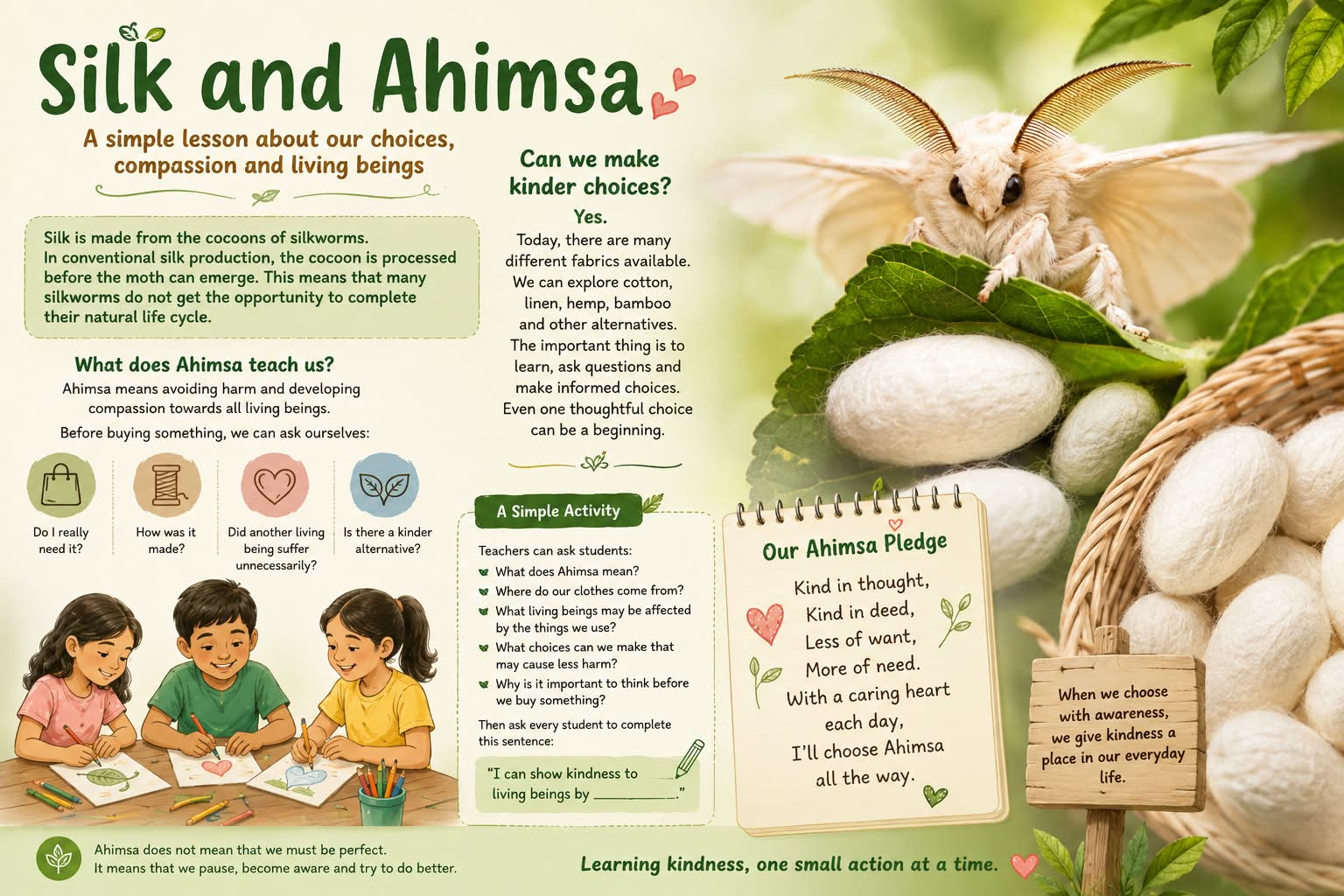
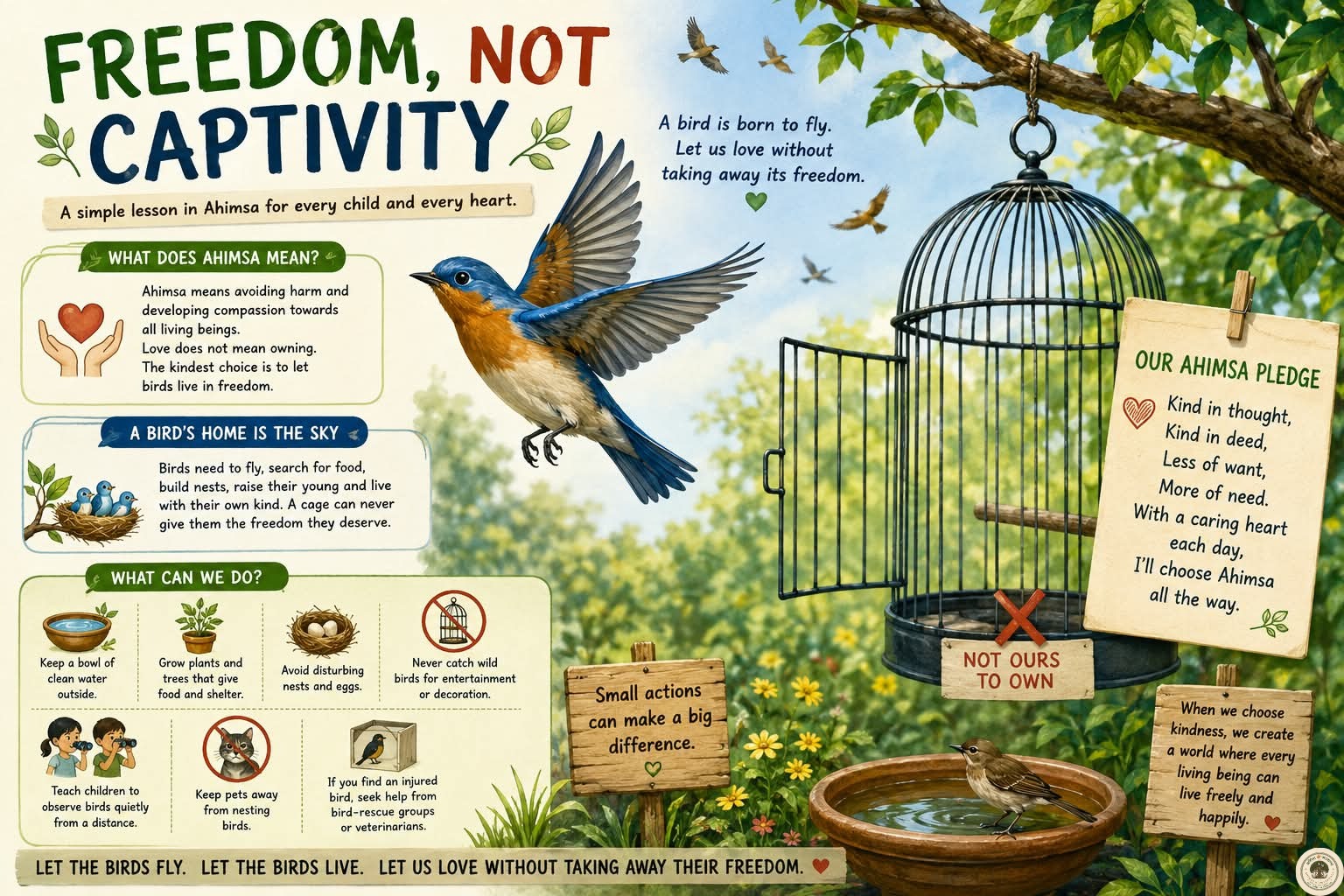
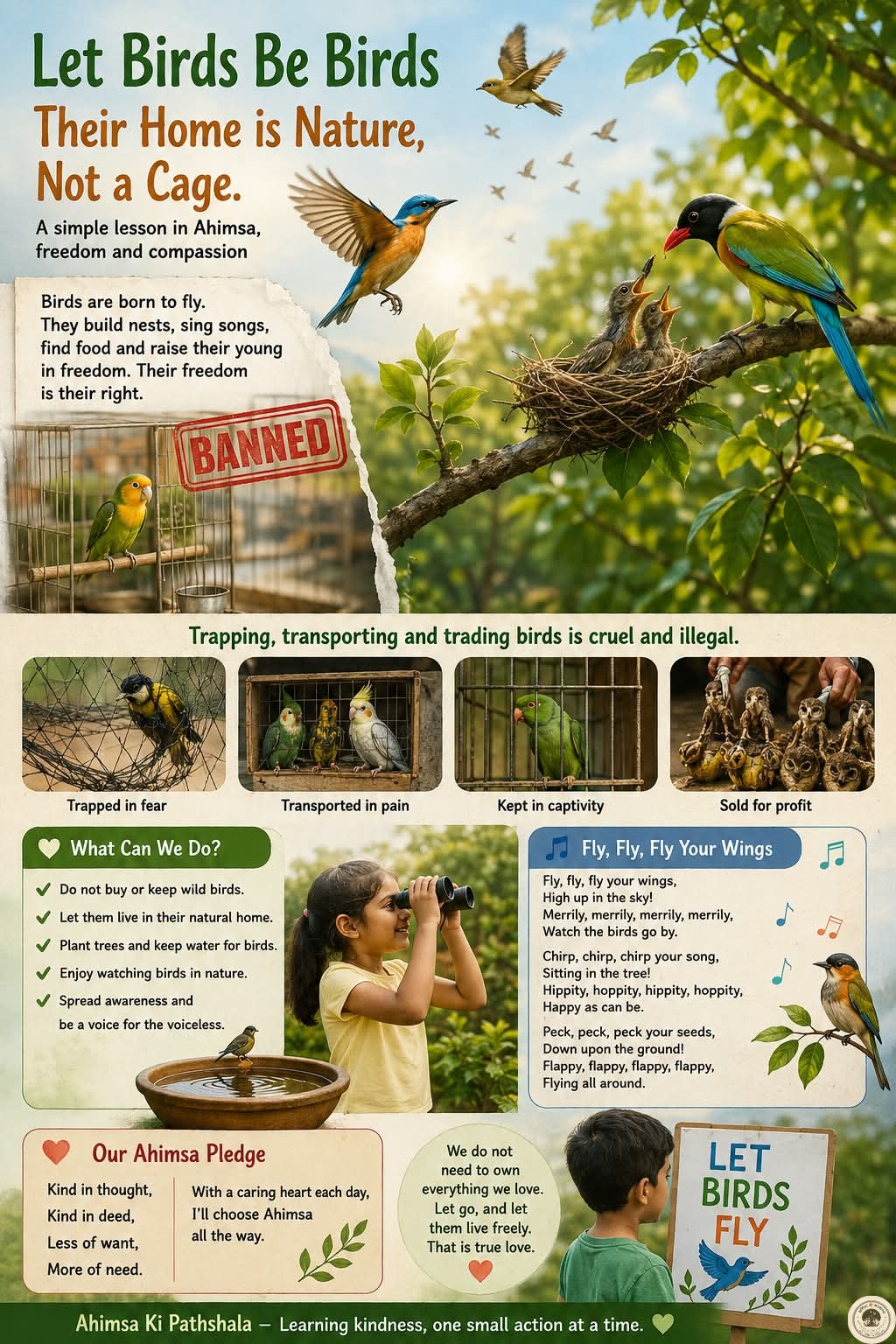
❤️ Our Ahimsa Pledge
Kind in thought,
Kind in deed,
Less of want,
More of need.
With a caring heart each day,
I’ll choose Ahimsa all the way.
🌿 A Thought to Take Home
Our ancestors had limited choices.
We have multiple choices today.
That difference gives us an opportunity—and a responsibility—to think about the impact of what we buy and use.
We don’t have to judge the past. We can simply learn from it and ask what is possible today.
Perhaps progress is not only about having more things.
Perhaps progress is also about learning to live with more compassion.
When we have a choice, let kindness be part of that choice.