A simple lesson in Ahimsa, freedom and compassion
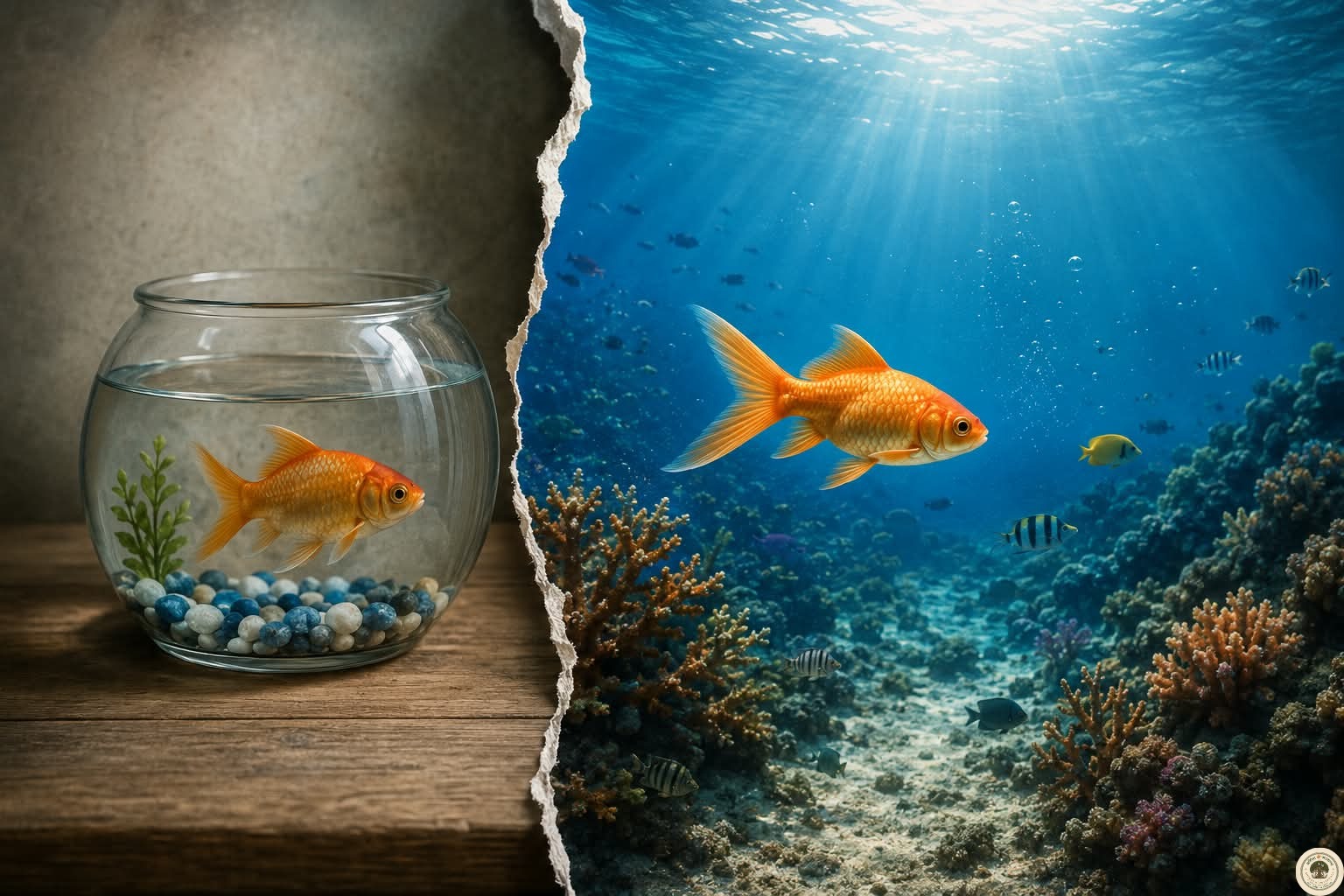
Imagine waking up one morning and finding yourself trapped in a small cage. You cannot leave. You cannot visit your family. You cannot choose where to go, what to eat or where to rest.
For a wild bird, this is what life can become when it is trapped and kept in captivity.
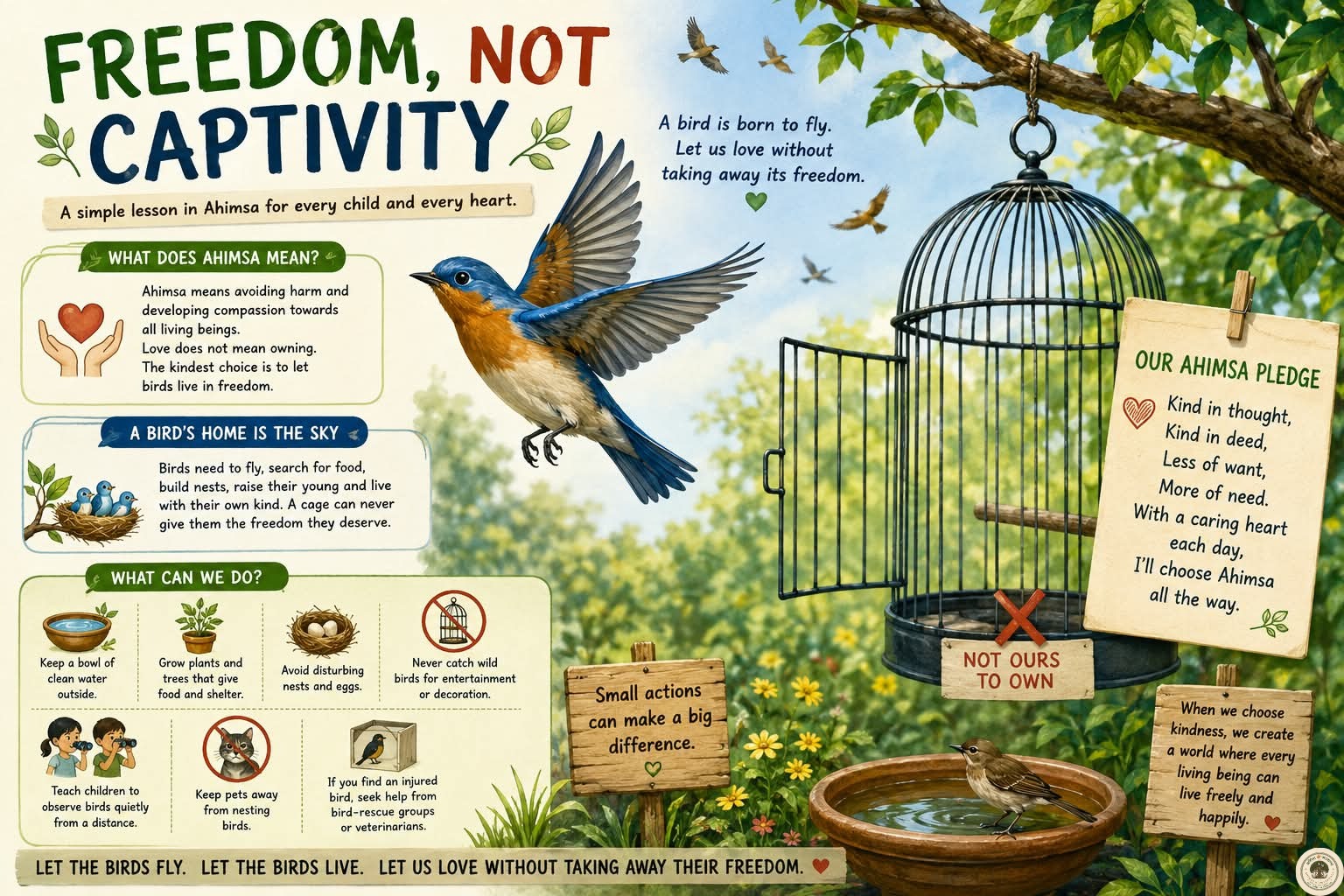
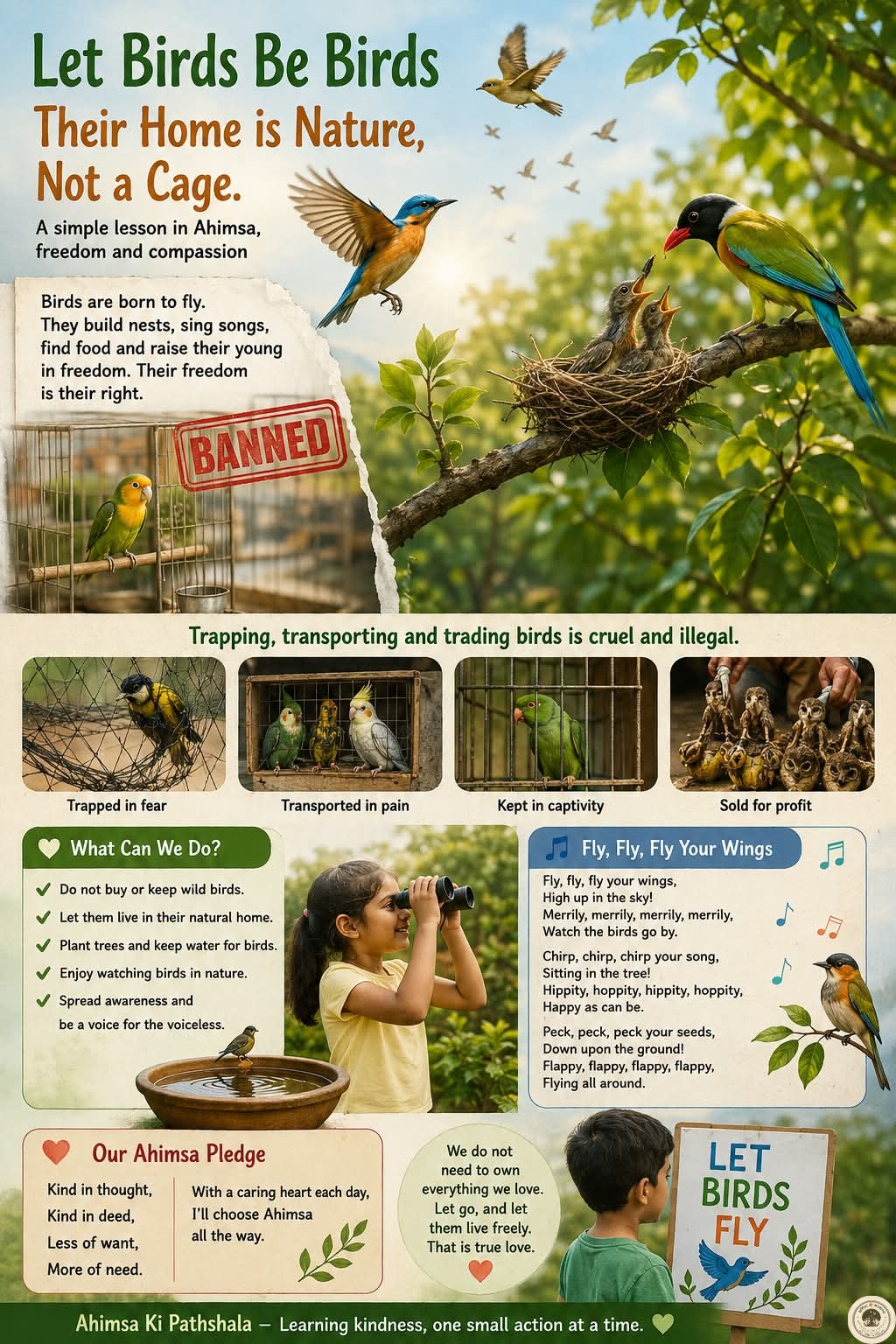
Birds are meant to fly. They build nests, search for food, raise their young, communicate with one another and move freely from place to place. Their freedom is not a luxury. It is a natural part of their life.
🌱 What happens when birds are trapped?
Wild birds are sometimes caught and taken away from their natural homes. They may then be transported, sold or kept in cages.
Some birds are captured for the pet trade. Others may be caught for entertainment, display or commercial purposes.
The journey itself can be frightening and stressful. Birds may be crowded into unsuitable spaces, handled roughly or separated from their families.
Even when a bird survives the journey, life in a cage can prevent it from behaving as it naturally would.
A bird that once had the whole sky may be left with only a small space.
❤️ Ahimsa means compassion
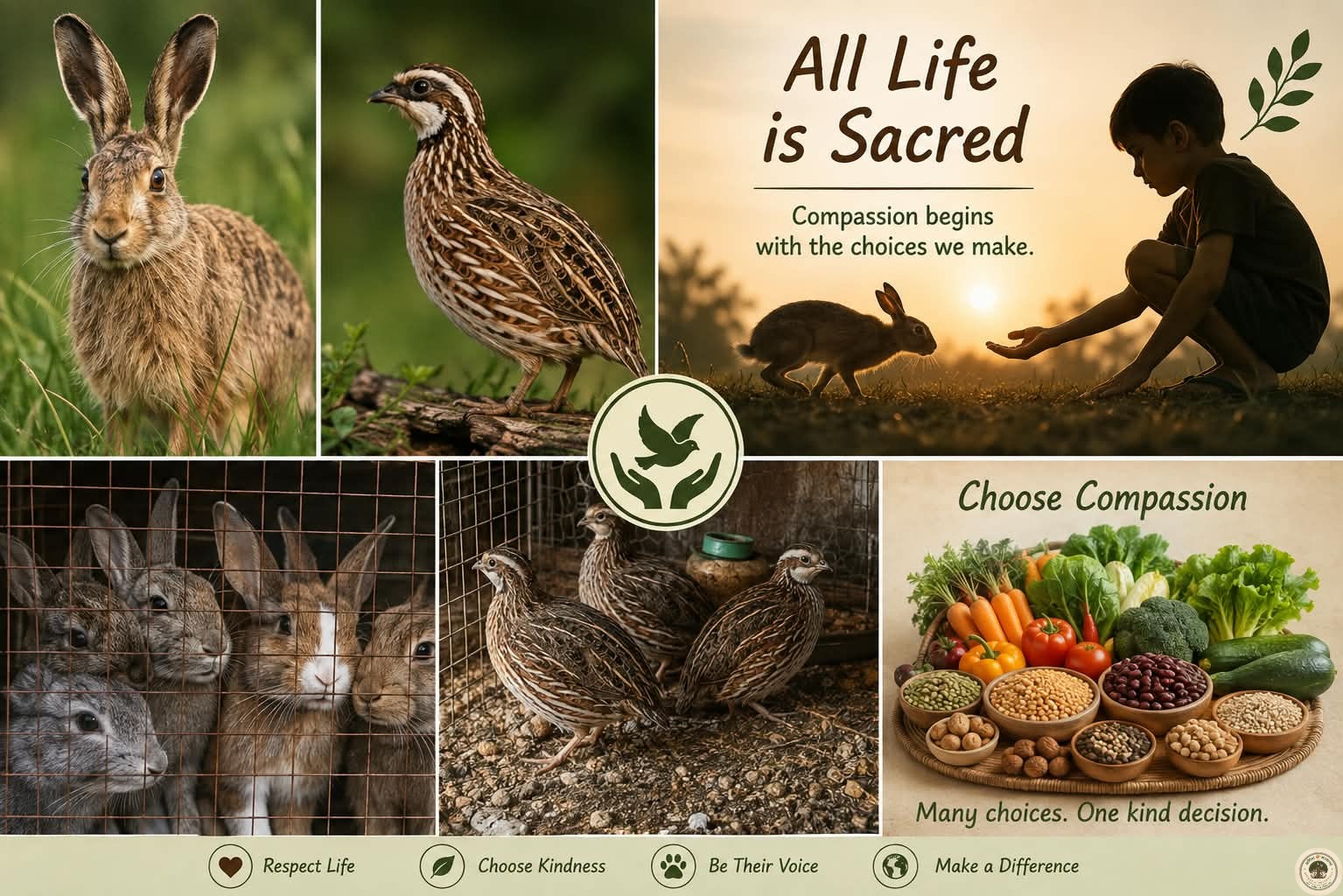
Ahimsa means avoiding harm and developing compassion towards all living beings.
Animals and birds are living beings, just like us. They have their own needs, feelings and ways of living.
Ahimsa asks us to look at the world from another living being’s point of view.
Instead of asking:
“How can I keep this beautiful bird?”
we can ask:
“How can I help this bird live freely?”
That simple change in thinking can make a big difference.
🕊️ Love does not mean ownership
Sometimes people buy birds because they admire their colours or love their songs.
But a bird’s song is most beautiful when the bird is free to sing in the open air.
We can appreciate birds without owning them.
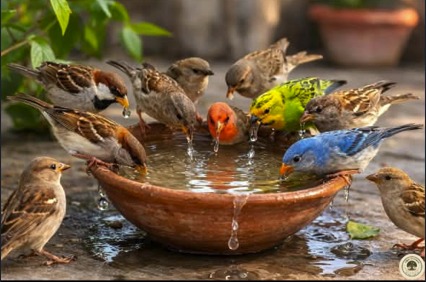
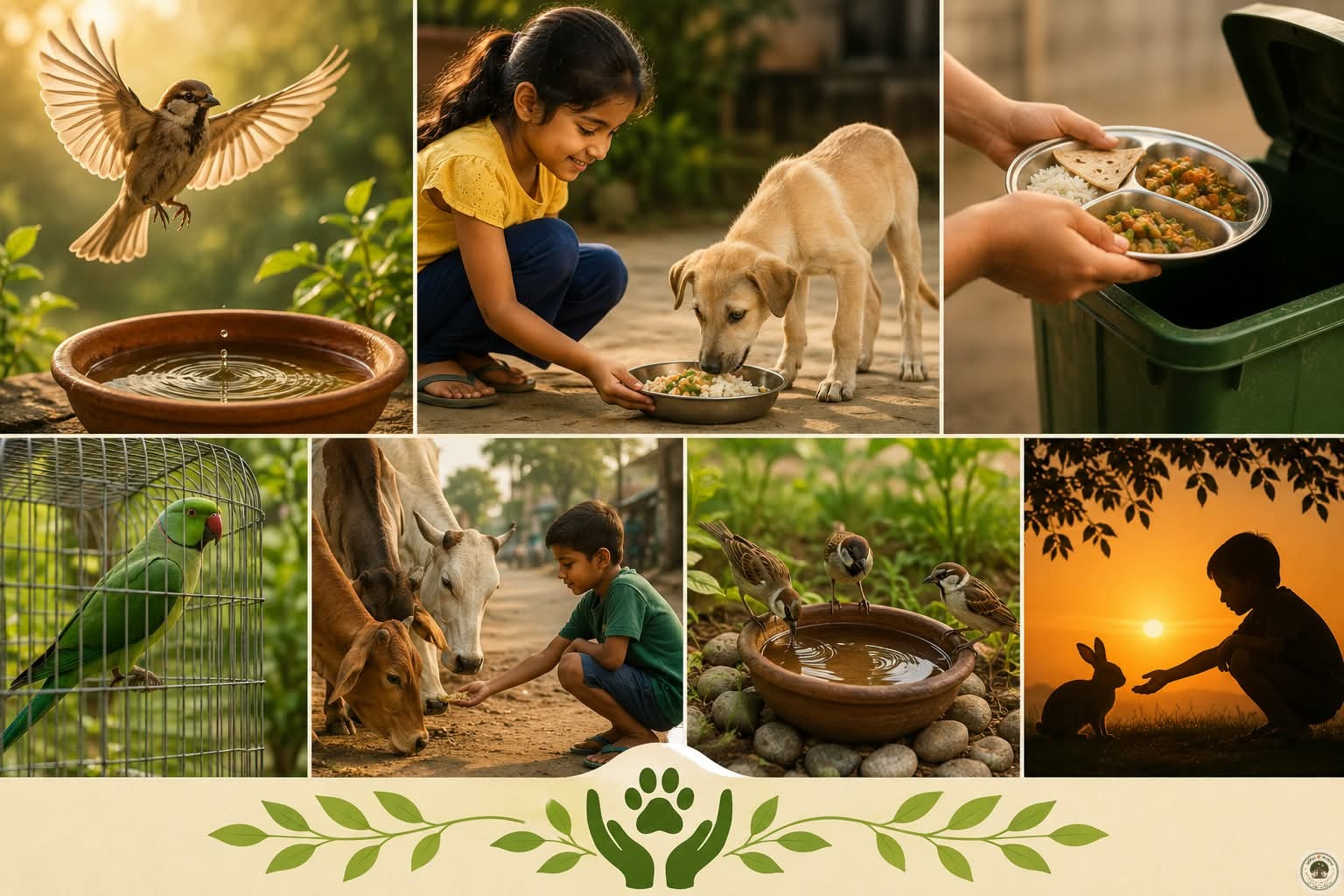
We can watch them from a distance. We can photograph them without disturbing them. We can plant trees and shrubs that provide food and shelter. We can keep clean water for birds, especially during hot weather.
There are many ways to show love without taking away freedom.
🚫 Trapping is not kindness
A wild bird belongs in nature.
Catching, transporting, trading or keeping protected wild birds can also have serious legal consequences in India. More importantly, these activities can cause fear, injury and suffering.
When we buy a wild bird, we may not see what happened before it reached us.
We may only see the beautiful bird in the cage.
Behind that cage, however, there may be a story of trapping, fear and separation from its natural life.
When we refuse to buy, we can help reduce the demand that encourages such capture and trade.
🏫 A Simple Ahimsa Ki Pathshala Activity
Teachers can begin a conversation with students:
What does Ahimsa mean?
Why do birds need freedom?
How might a bird feel when it is trapped?
What can we do to make our neighbourhood safer for birds?
How can we enjoy watching birds without keeping them captive?
Then ask every student to complete:
“I can help birds by ____.”
They can write their answer, draw a picture or share it with the class.
🎵 A Song for Our Feathered Friends
Fly, Fly, Fly Your Wings
Fly, fly, fly your wings,
High up in the sky!
Merrily, merrily, merrily, merrily,
Watch the birds go by.
Chirp, chirp, chirp your song,
Sitting in the tree!
Hippity, hoppity, hippity, hoppity,
Happy as can be.
Peck, peck, peck your seeds,
Down upon the ground!
Flappy, flappy, flappy, flappy,
Flying all around.
❤️ Our Ahimsa Pledge
Kind in thought,
Kind in deed,
Less of want,
More of need.
With a caring heart each day,
I’ll choose Ahimsa all the way.
🌿 A Thought to Take Home
We do not need to own everything we love.
Sometimes, the greatest expression of love is to let go and let another living being live freely.
The next time you see a bird flying across the sky, pause for a moment.
Watch its wings.
Listen to its call.
And remember:
**The sky is its home.
Freedom is its right.
Let the birds fly.** 🐦🌿