We live in a world filled with many choices.
Every day, we make choices about what we eat, what we wear, what we buy and how we treat other living beings. Some choices may seem small, but they can teach us something important about kindness and compassion.
One such question is: Do we need to kill animals for food when we have other choices?
🌱 Wild Animals Have Their Own Lives
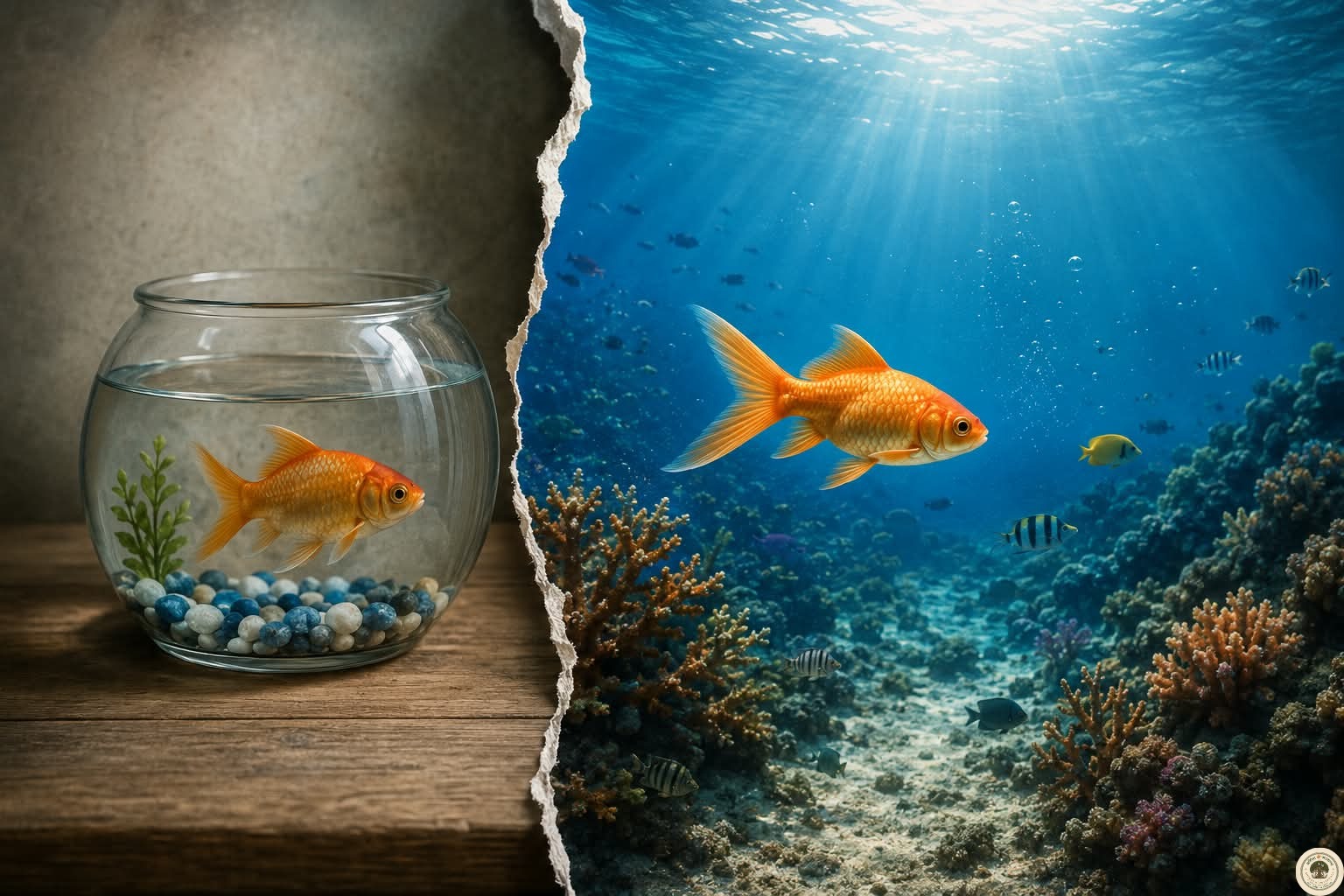
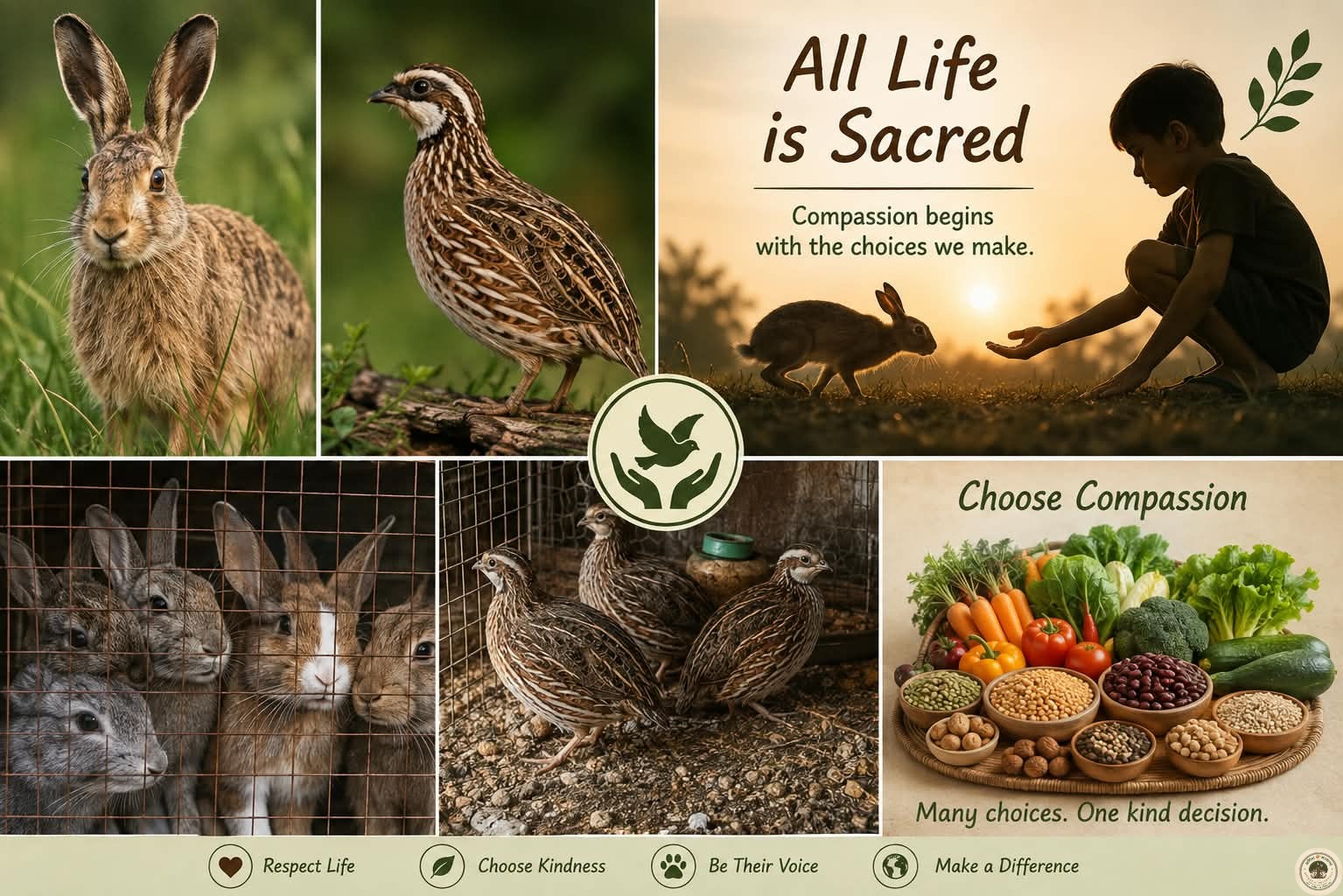
Think about a hare running freely through a field or a quail walking through the grass.
They are not objects. They are living beings, just like us.
They look for food, seek shelter, care for their young and try to stay safe from danger. They have a life of their own.
When we see an animal in nature, we usually admire its beauty and freedom. But sometimes, the same kind of animal may be bred or raised specifically to be killed and eaten.
This difference is worth thinking about.
🐾 From Living Being to Food
When an animal is raised for food, it can become easy for us to see only the final product on our plate.
We may forget that before it became food, there was a living, breathing animal.
A rabbit was once running and exploring.
A quail was once moving, eating and responding to the world around it.
The name may change, but the life was real.
This is where compassion asks us to pause.
❤️ What Does Ahimsa Teach Us?
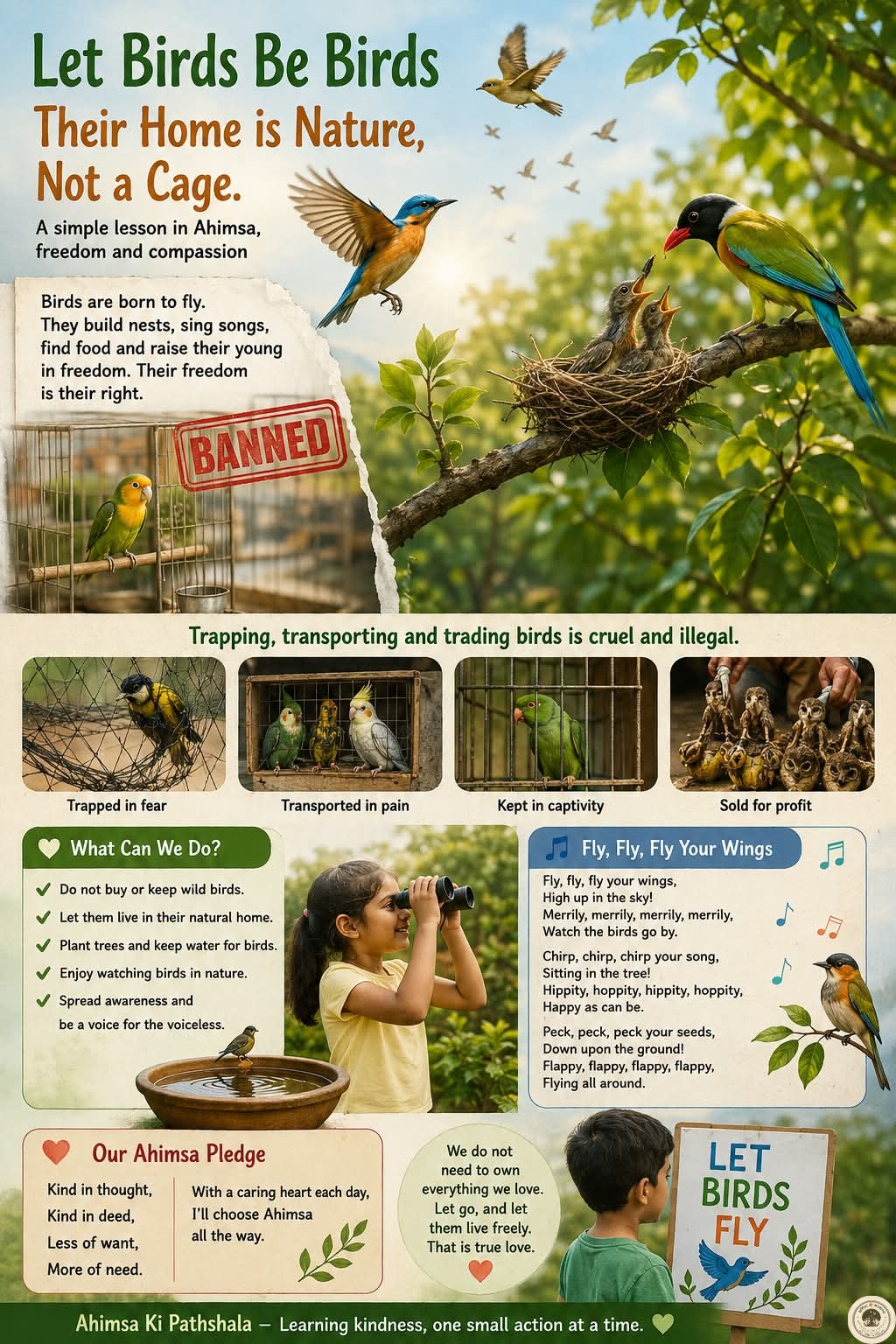
Ahimsa means living with as little harm as possible and developing respect for all living beings.
Ahimsa does not ask us to stop caring only when an animal is cute or beautiful.
It asks us to extend our compassion to animals even when they are different from us, unfamiliar to us, or not considered traditional companions.
If we believe that life has value, we can ask:
Does an animal have to die for me to enjoy a meal?
And if we have multiple choices, perhaps we can choose the one that causes less harm.
🍃 Choice Is Powerful
Today, many people have access to a wide variety of foods.
We can choose fruits, vegetables, grains, pulses, nuts, seeds and many other plant-based foods.
This means that for many of us, eating animals is not simply a question of survival. It can also be a question of choice.
Our ancestors often had fewer options. We have multiple choices today.
That gives us an opportunity to make our choices more thoughtful.
🏫 A Lesson for Ahimsa Ki Pathshala
This is a wonderful subject for a classroom conversation.
Teachers can ask students:
What does it mean to respect life?
How are animals similar to us?
Do animals have families and feelings?
Why do we treat some animals as companions and others as food?
If we have multiple choices, can we choose a kinder one?
There does not need to be an argument or judgment.
The purpose is simply to think, question and develop compassion.
Children can also draw an animal they love and write one sentence:
“This living being deserves ____.”
Possible answers might be:
freedom, kindness, care, safety, love and respect.
🌿 A Simple Ahimsa Thought
We don’t have to change the whole world in one day.
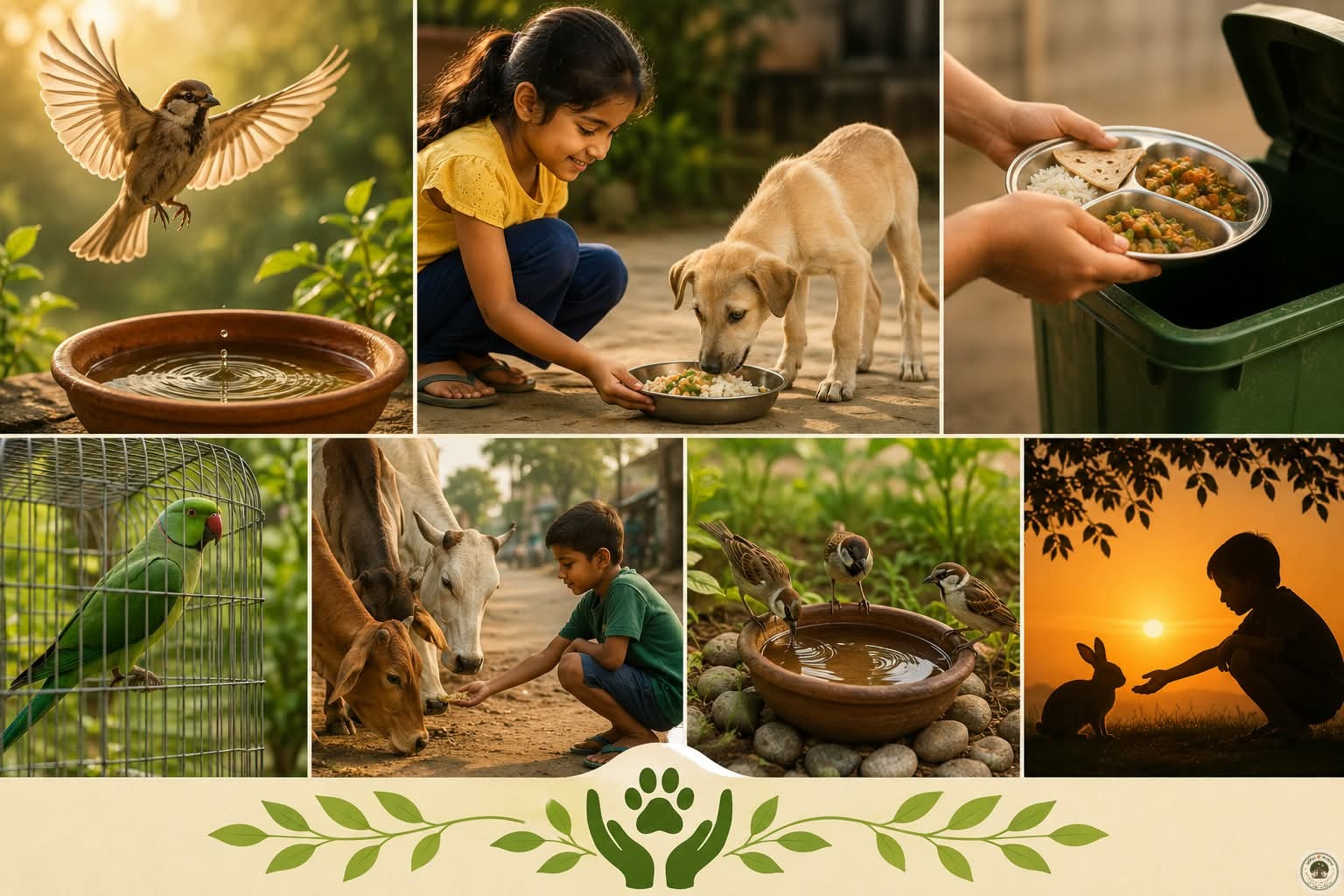
We can begin with one question, one meal, one decision and one act of kindness.
Before making a choice, we can pause and ask:
“Is there a kinder choice I can make?”
That small pause can slowly change the way we see the world.
Because compassion is not only about how we treat the animals we love.
It is about recognising the value of every living being.
❤️ All life is sacred.