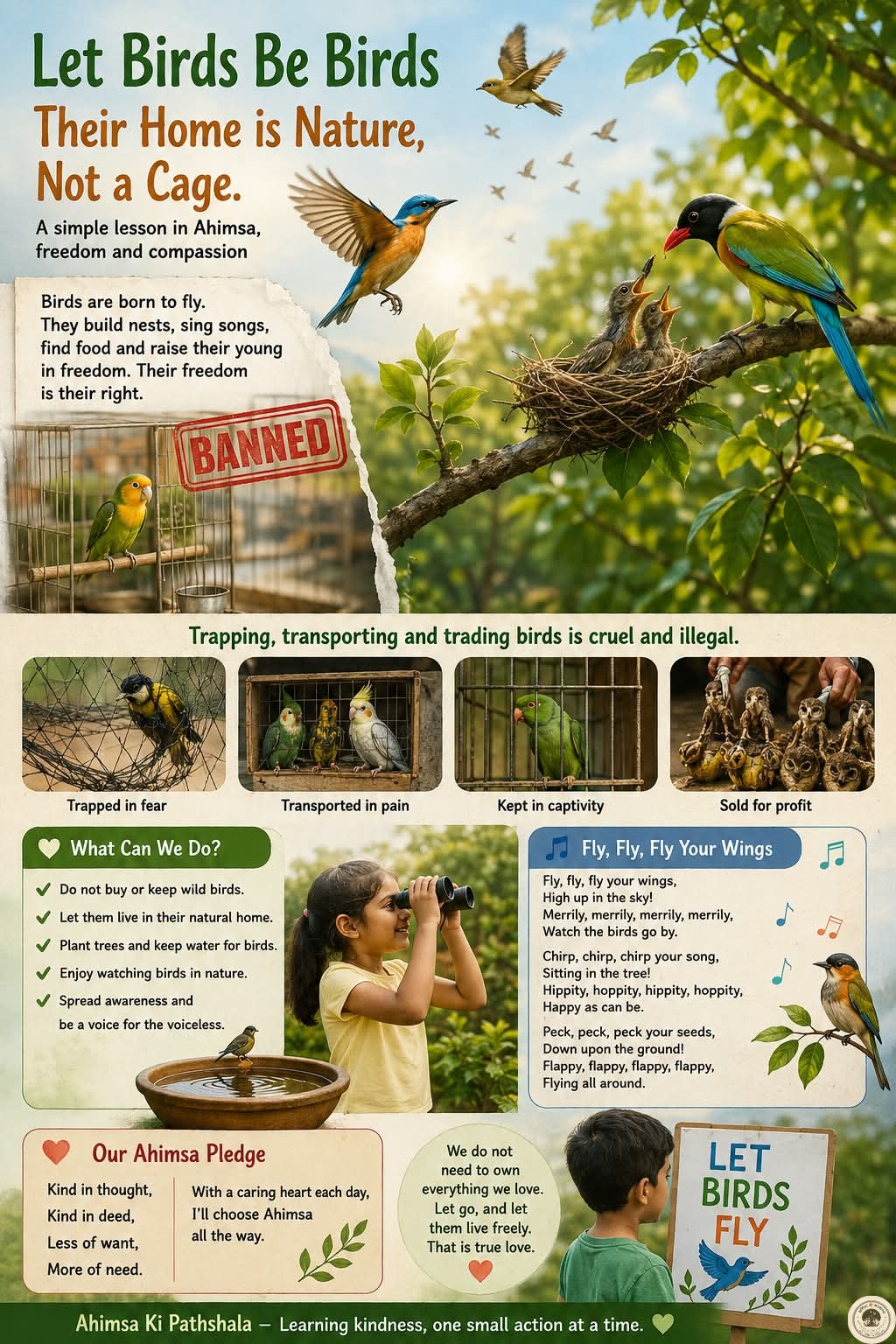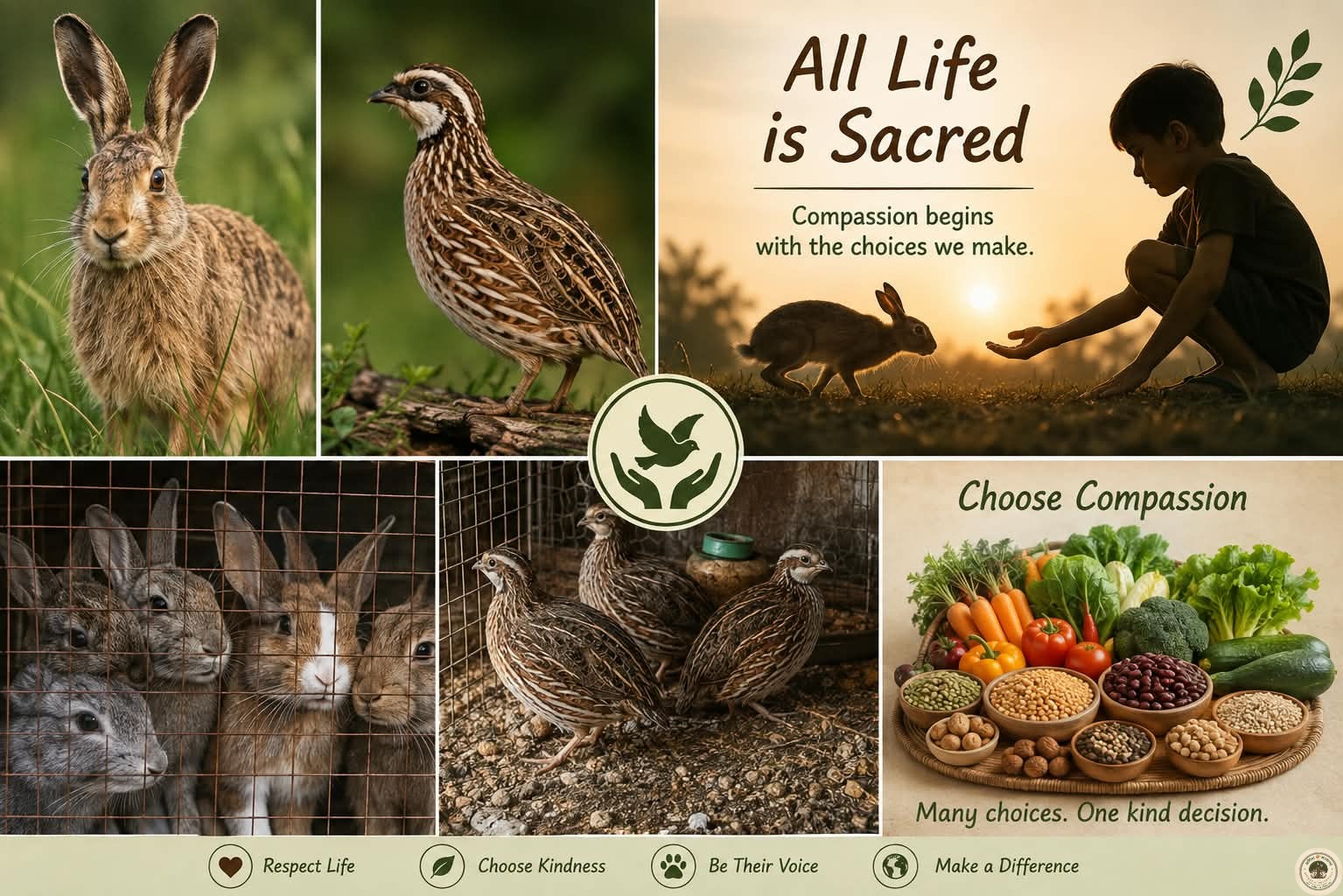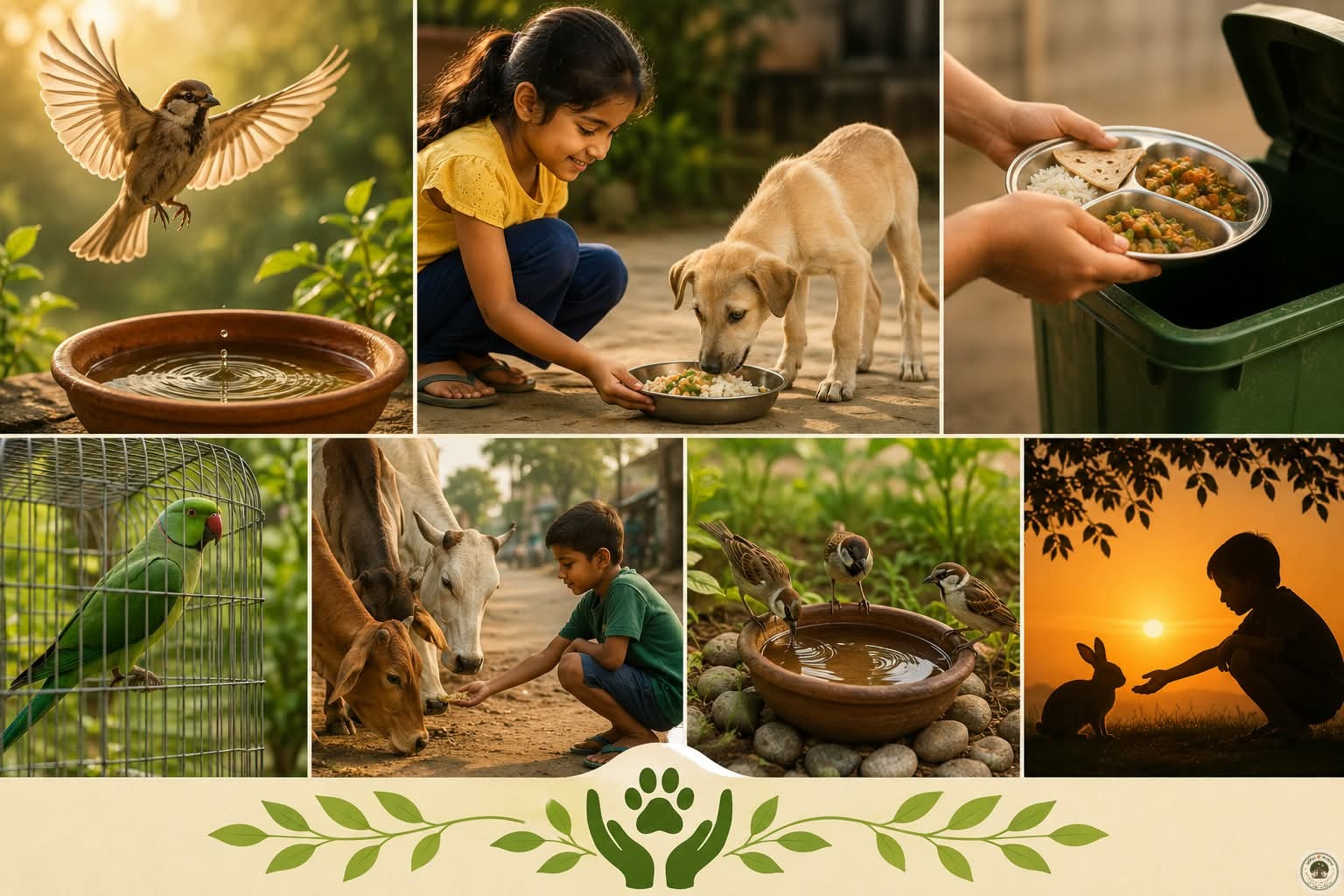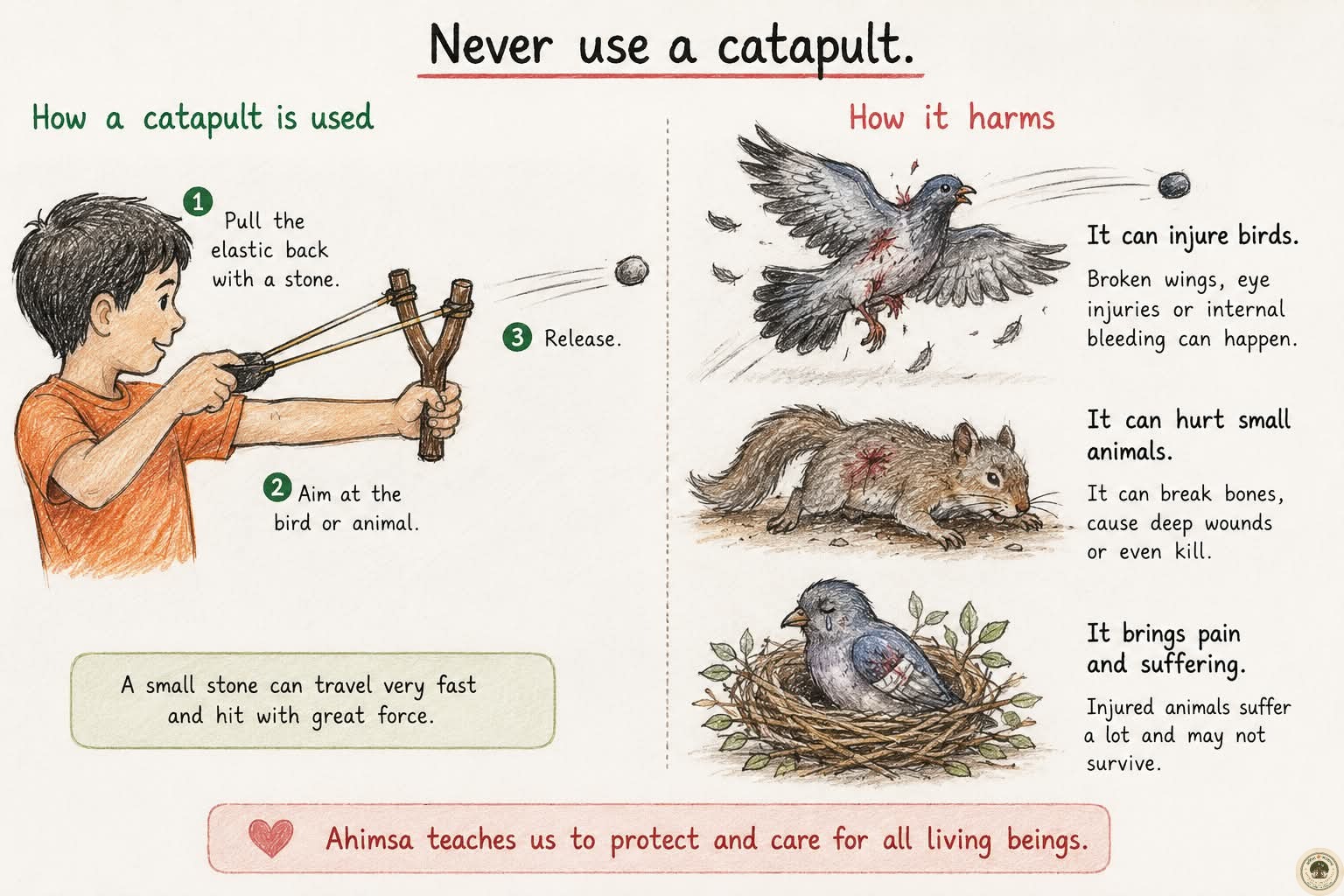
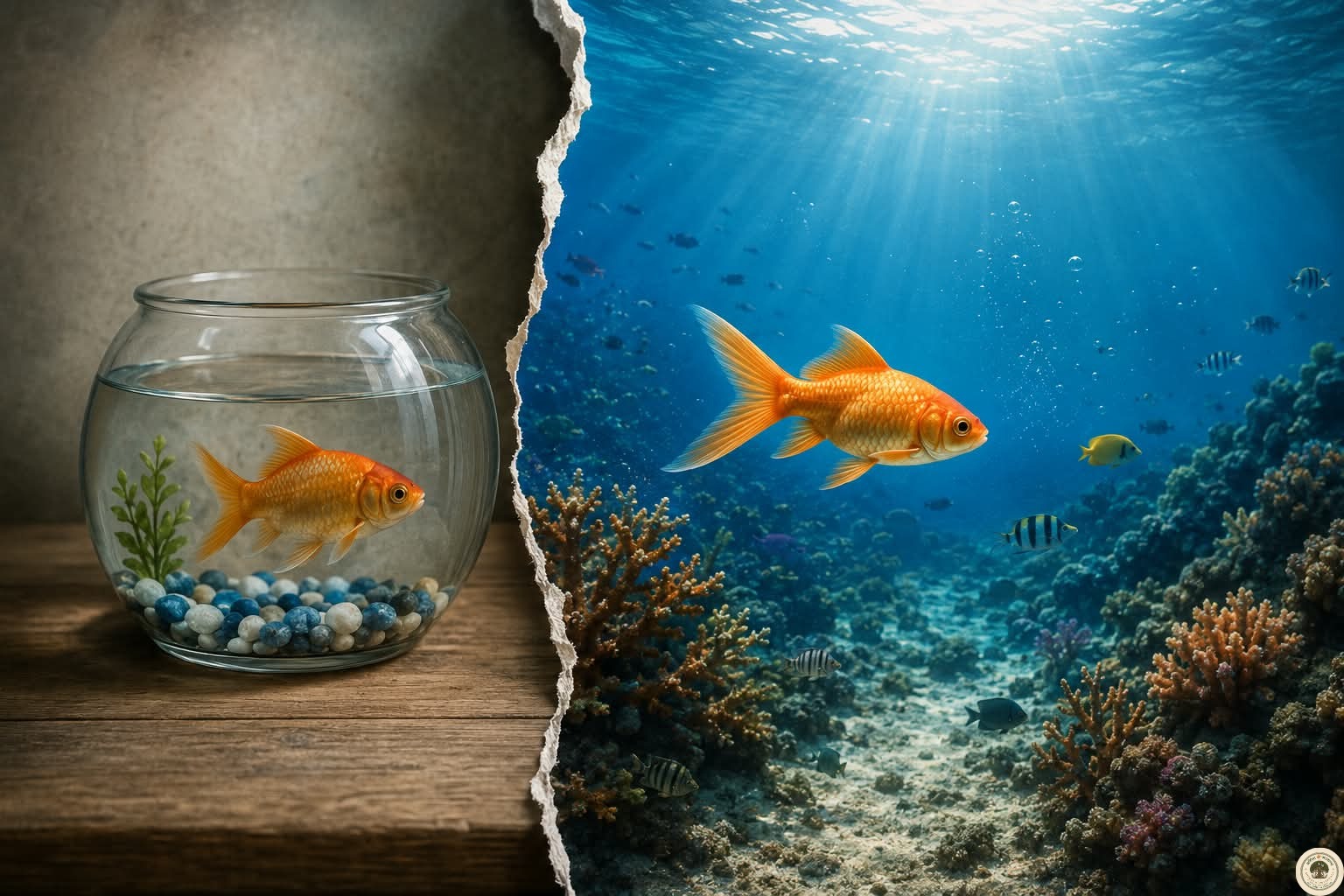
A simple lesson in Ahimsa, freedom and compassion
Have you ever watched a fish swimming?
It moves quietly through the water, turning, gliding and exploring its surroundings. Watching fish can be peaceful and beautiful.
But there is an important question we should ask:
Is a fish meant to live in a small bowl just because we enjoy watching it?
A fish is born to live in water. It needs space to swim, clean water, suitable food, oxygen and an environment that meets its natural needs. The world beneath the water is its home.
When we take a fish from its natural environment and keep it simply for our pleasure, we should stop and think about what the fish needs—not only what we want.
🌱 What does Ahimsa teach us?
Ahimsa means avoiding harm and developing compassion towards all living beings.
Fish may live in a world very different from ours, but they are living beings, just like us. They need a safe environment in which they can live their natural lives.
Ahimsa teaches us to look beyond our own wishes.
We may think:
“It is only a small fish.”
But to the fish, its life is not small.
Its life matters.
🌊 A fish needs more than water
A bowl may look beautiful with colourful stones and plants. But a fish needs much more than something that looks attractive to us.
It needs an environment where it can:
Swim and move naturally.
Find food and shelter.
Breathe properly.
Rest and stay healthy.
Interact with other fish, where appropriate.
Live according to its natural behaviour.
This is why keeping fish as decoration without understanding their needs can become a form of unintentional cruelty.
Good intentions are not always enough. Awareness matters too.
❤️ Love does not always mean ownership
We often say, “I love animals.”
But what does love really mean?
If we love a fish, perhaps the kindest thing is to watch it in its natural home rather than capture it for our enjoyment.
We can visit ponds, lakes, rivers and the sea responsibly. We can learn about aquatic life. We can protect water bodies from pollution and teach others why clean water is important.
Sometimes, loving a living being means allowing it to remain free.
🏫 A Simple Ahimsa Ki Pathshala Activity
Teachers can ask students:
“How would you feel if someone took you away from your home and kept you in a small space just so others could look at you?”
Then discuss:
What does freedom mean?
What does a fish need to live well?
Why should we respect the natural homes of animals?
How can we protect rivers, lakes, ponds and oceans?
Can we enjoy watching animals without owning them?
Ask each student to complete:
“I can help aquatic animals by ____.”
Their answers could include keeping water clean, not throwing plastic into water bodies, or simply learning more about aquatic life.
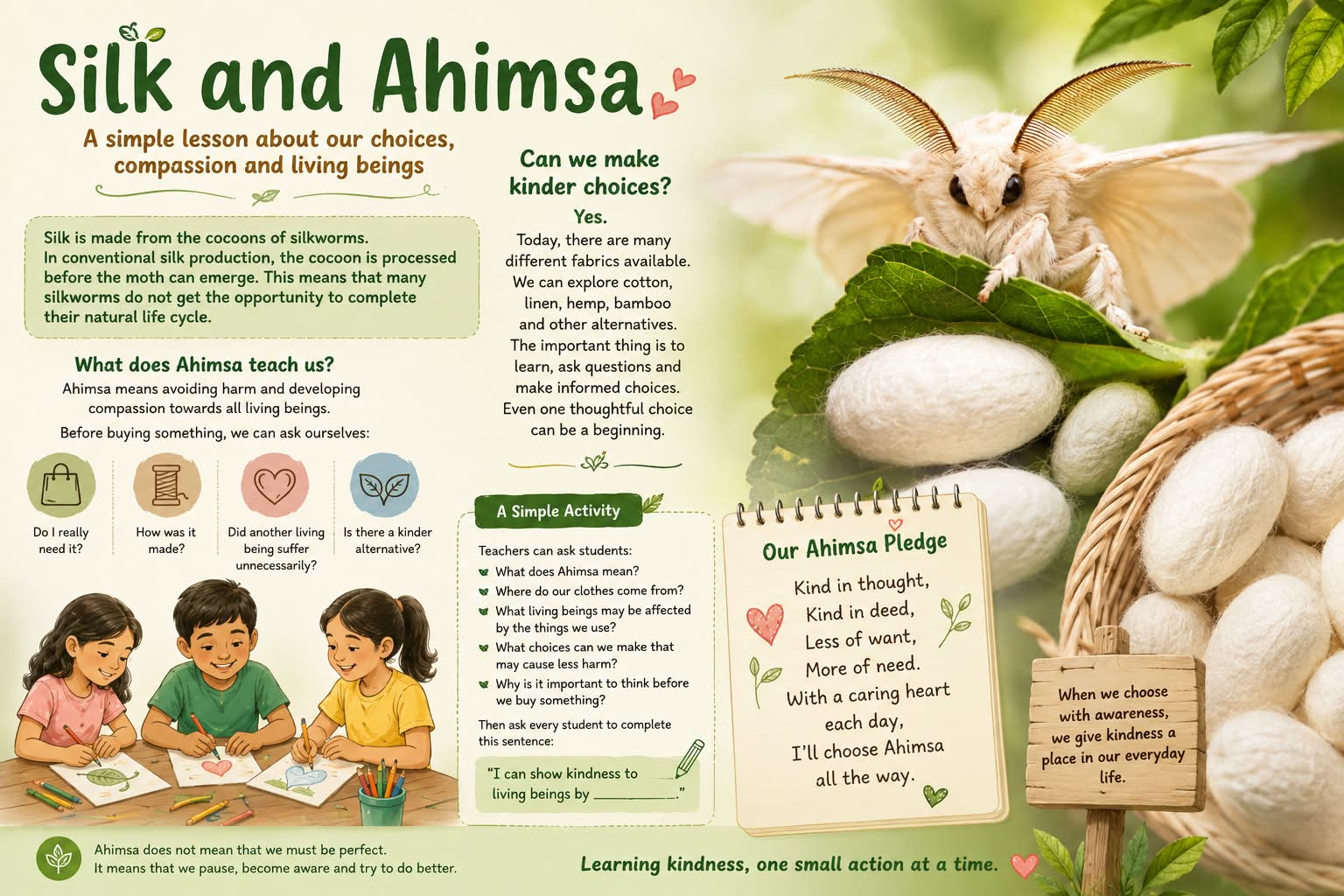
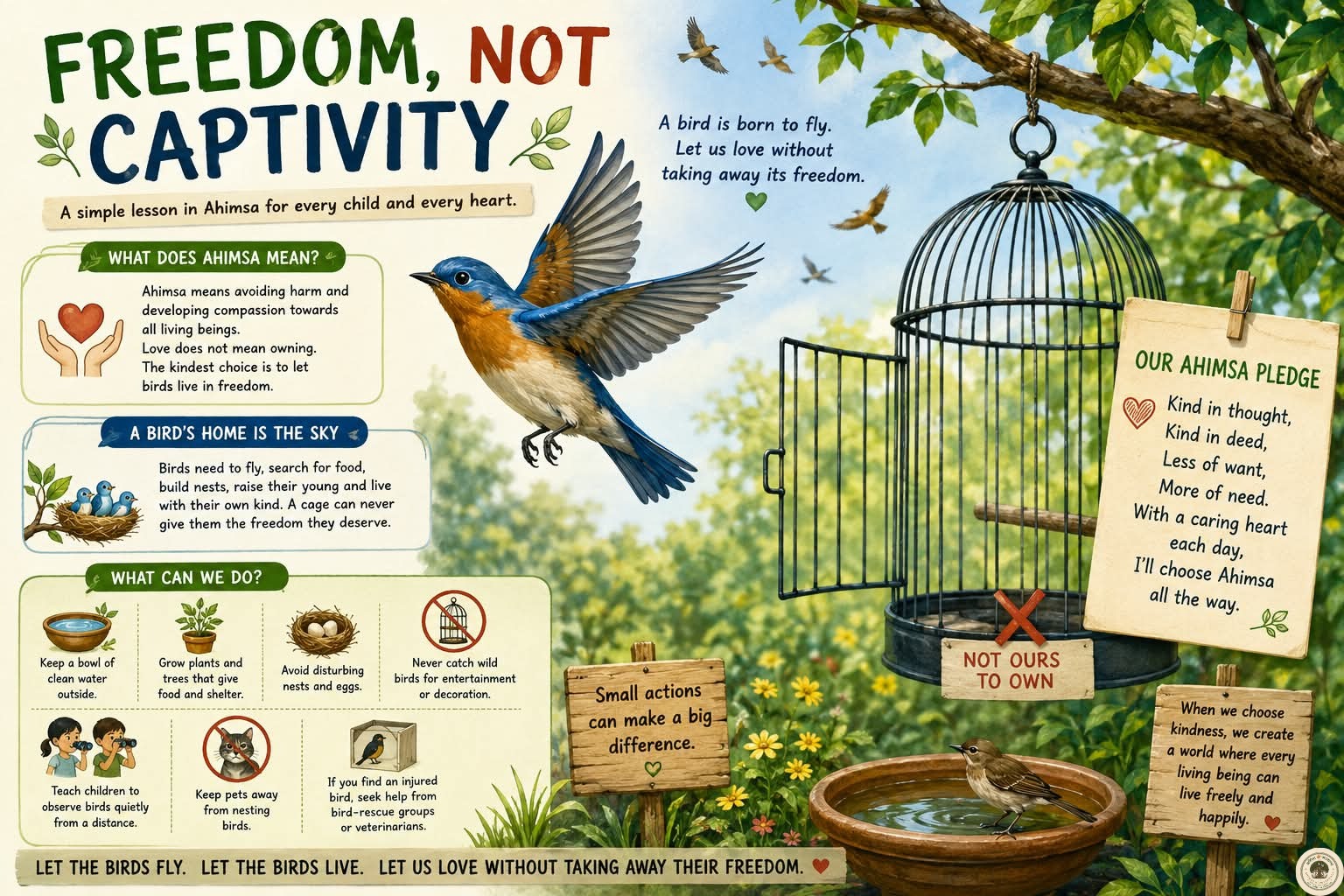
🐟 Our Ahimsa Pledge
Kind in thought,
Kind in deed,
Less of want,
More of need.
With a caring heart each day,
I’ll choose Ahimsa all the way.
🌿 A Thought to Take Home
The next time we see a fish swimming freely, let us appreciate its beauty without thinking that we need to possess it.
A fish does not need our cage.
It needs its water.
It needs its freedom.
It needs a chance to live its own life.
At Ahimsa Ki Pathshala, let us learn to care not only for the animals we know and love, but also for the tiny lives that live beneath the water.
**Let the fish swim.
Let the waters stay clean.
Let every living being have the freedom to live.** 🐟🌊